
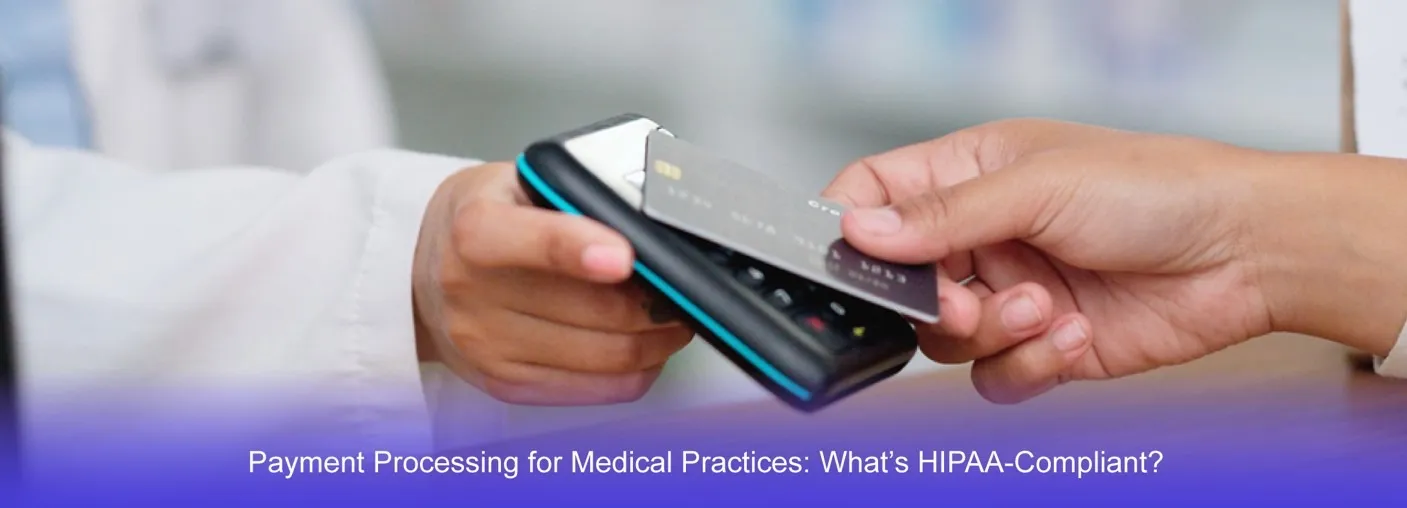
Handling payments in a medical setting isn’t as simple as running a credit card. Healthcare providers deal with sensitive patient data every day, and that responsibility extends to how payments are processed. If your system isn’t secure, you’re not just risking financial loss, you could also be violating HIPAA regulations. That’s a serious issue.
Let’s break down what HIPAA-compliant payment processing actually means and what medical practices should look for.
Understanding HIPAA and Payment Security with a Merchant Processing Service Provider
HIPAA, or the Health Insurance Portability and Accountability Act, sets strict rules for protecting patient health information (PHI). While payment data like credit card numbers falls under PCI compliance, things get more complicated when payment systems also handle patient details.
For example, if a payment receipt includes a patient’s name, treatment type, or any identifiable health information, that data must be protected under HIPAA.
A reliable merchant processing service provider should understand this overlap. It’s not enough for them to offer standard payment security. They must ensure that any system used in a healthcare environment keeps PHI secure, encrypted, and accessible only to authorized users.
Look for providers that offer end-to-end encryption, tokenization, and secure storage. These features reduce the risk of data exposure and help keep your practice compliant.
Why Online Merchant Service Providers Must Meet Higher Standards
Many practices now accept payments online, whether through patient portals, billing systems, or telehealth platforms. This convenience is great for patients, but it also introduces more risk if not handled properly.
Not all online merchant service providers are built for healthcare. Some may meet PCI standards but fall short when it comes to HIPAA requirements.
When choosing an online solution, ask these questions:
-
Does the system store or transmit patient data?
-
Is there a Business Associate Agreement (BAA) in place?
-
Are all transactions encrypted and monitored?
A HIPAA-compliant provider will be transparent about these points. They’ll also have safeguards in place to prevent unauthorized access, including multi-factor authentication and audit trails.
Choosing the Right Merchant Services Payment Processing Solutions
Not every payment system fits a medical practice. You need tools that work with your existing workflows while maintaining compliance.
The best merchant services payment processing solutions for healthcare often include:
-
Integrated billing with electronic health records (EHR)
-
Secure patient portals for online payments
-
Recurring billing options for ongoing treatments
-
Contactless and mobile payment capabilities
But features alone aren’t enough. Compliance must be built into every layer of the system.
For example, if your payment platform integrates with your EHR, it must ensure that any shared data is encrypted and only accessible to authorized staff. Even something as simple as emailing a receipt must be handled carefully to avoid exposing PHI.
Common Risks in Merchant Processing Services for Healthcare
Many practices assume their payment system is compliant just because it’s widely used. That’s a risky assumption.
Here are some common issues found in standard merchant processing services:
-
Storing patient data without proper encryption
-
Lack of access controls for staff
-
No audit logs to track data usage
-
Third-party integrations that aren’t HIPAA-compliant
Even a small oversight can lead to a data breach. And in healthcare, breaches don’t just mean fines. They can damage patient trust, which is much harder to rebuild.
To avoid these risks, conduct regular audits of your payment systems. Make sure your provider updates their security measures and stays aligned with evolving regulations.
What to Look for in the Best Merchant Processing Service Provider
Choosing the right partner can make a huge difference. The best merchant processing service provider for medical practices will go beyond basic payment handling.
Here’s what to prioritize:
-
HIPAA-aware infrastructure and processes
-
Willingness to sign a Business Associate Agreement (BAA)
-
Advanced security features like tokenization and encryption
-
Seamless integration with healthcare systems
-
Transparent reporting and support
A provider that understands healthcare will also help guide your staff on best practices. Training and support are just as important as the technology itself.
If you’re looking for a solution tailored to medical practices, Beyond Bancard offers systems designed with both compliance and efficiency in mind, helping you manage transactions securely without disrupting your workflow. For more information or to explore your options, contact us at +1-844-365-3050. Getting payment processing right in healthcare isn’t just about convenience; it’s about protecting your patients, your practice, and your reputation, and choosing the right partner can make all the difference.
