

You did everything right. Your old antiperspirant was making your underarms itchy, so you read up, ditched the aluminium and bought a natural alternative. A couple of weeks later, the itching is back. Maybe it’s even worse.
It’s a disappointing moment, and a very common one. Many people assume aluminium is the main thing that irritates skin, so removing it should solve the problem. In reality, aluminium is just one ingredient among many, and for plenty of people it was never the culprit in the first place.
If you’ve switched to an aluminum free deodorant and your skin still isn’t happy, this guide will help you work out what’s really going on.
Removing Aluminium Doesn’t Remove Every Irritant
Aluminium-free deodorants control odour without the aluminium salts found in antiperspirants. That’s a meaningful difference. But a formula is made up of many ingredients, and taking one out leaves the rest in place.
Add in the conditions your underarms face every day, such as constant movement, moisture, friction and regular shaving, and it’s easy to see why a new product can still sting.
Is It Irritation or an Allergy?
It helps to know which kind of reaction you might be dealing with.
Irritant contact dermatitis happens when something damages or disrupts the skin’s protective barrier. It often shows up as stinging, dryness or redness soon after applying a product.
Allergic contact dermatitis is your immune system reacting to a specific ingredient. It can develop even after months of trouble-free use, and symptoms may appear hours or a day after application.
They can look alike, so if reactions keep coming back, it’s worth getting a professional opinion.
The Real Culprits Hiding in Aluminium-Free Formulas
Every brand makes its deodorant differently. Here are the ingredients most often behind irritation once aluminium is out of the picture.
1. Baking Soda
Sodium bicarbonate is one of the most popular odour-fighters in natural deodorants, and it works well. The trouble is that it’s alkaline, while your skin is naturally slightly acidic. Some people find that daily use leads to itching, redness or a sore, darkened patch.
If your problems started after switching to a natural product, baking soda is the first thing to check for. A bicarbonate-free formula is often the fix.
2. Fragrance and Essential Oils
Fragrance is one of the best-known triggers of allergic contact dermatitis. Many natural deodorants use essential oils for scent, and these can be just as reactive as synthetic perfumes. If scented products tend to bother you, choose a fragrance-free deodorant.
3. Drying Alcohols
Some formulas use alcohol so the product dries quickly. On freshly shaved or already sore skin, that can sting. Not every “alcohol” on a label is the same, though. Fatty alcohols, used to soften and thicken formulas, behave very differently.
4. Preservatives and Plant Extracts
Certain preservatives and botanical ingredients can also cause reactions in sensitive people. This is exactly why the full ingredient list matters more than reassuring words like “natural” or “aluminium-free” on the front.
Deodorant vs Antiperspirant: Clearing Up the Confusion
Many people searching for an aluminium free antiperspirant are really looking for something to replace their usual sweat-blocking product. It’s worth knowing that the two categories do different jobs.
Antiperspirants use aluminium salts to temporarily reduce sweating. Deodorants don’t reduce sweat. They tackle the odour that forms when bacteria on your skin break down compounds in sweat and skin oils.
So Will an Aluminium-Free Deodorant Stop Me Sweating?
No. It’s designed to keep you smelling fresh, not dry. Some formulas neutralise odour, others make the skin less friendly to odour-causing bacteria. Knowing this from the start means you won’t expect it to behave exactly like your old antiperspirant.
Why Shaving Makes Things Worse
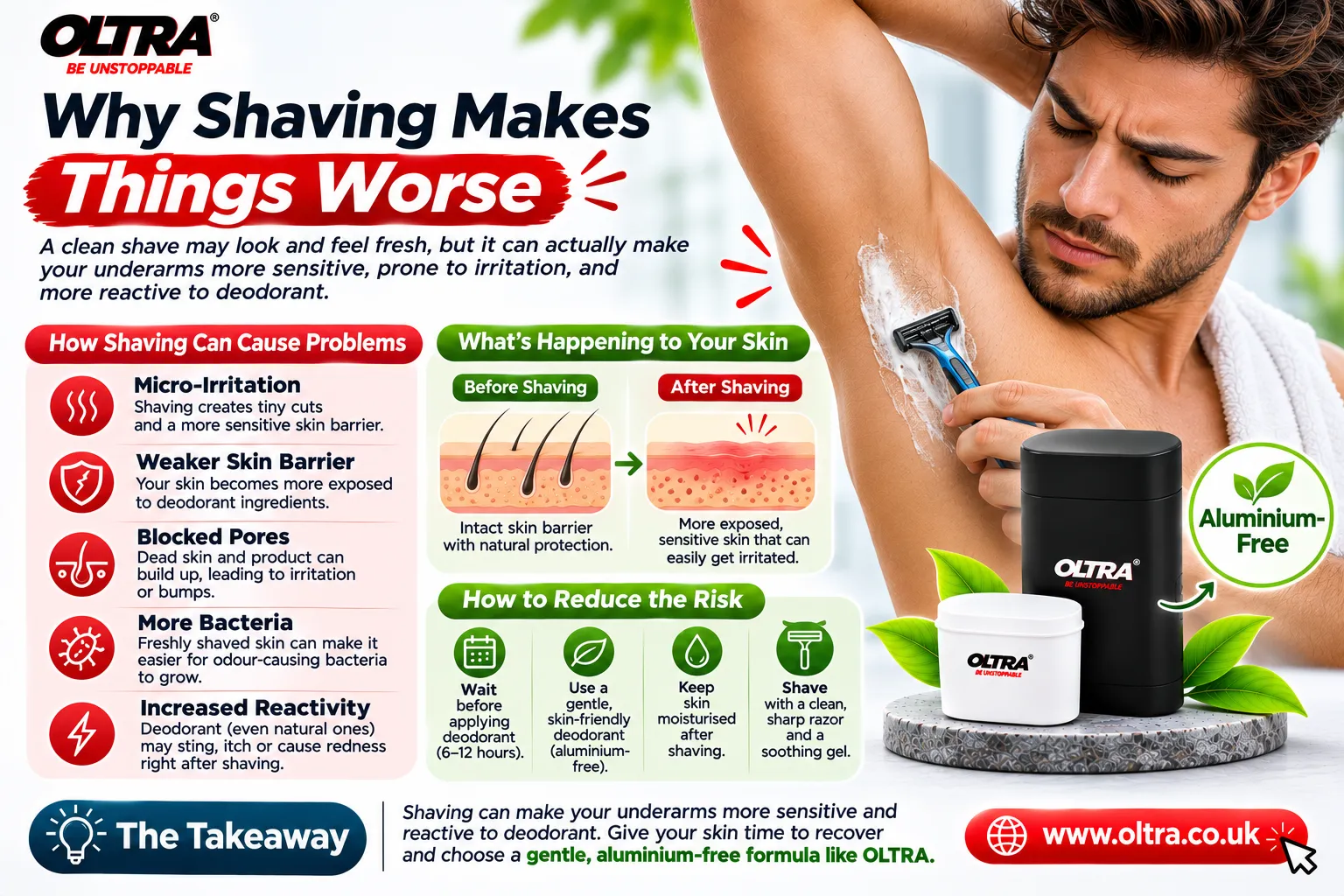
Shaving doesn’t just remove hair. It also scrapes away a thin layer of skin and can leave tiny nicks you can’t see. That makes freshly shaved underarms far more likely to sting when deodorant goes on.
If your reactions are worst on shaving days, try shaving at night and applying deodorant the next morning. Never apply over broken skin or a visible rash.
Work Out Your Trigger, Step by Step
Rather than buying product after product, try a more methodical approach.
Stop and reset. Give your underarms a break until any irritation has fully settled.
Compare labels. Line up the ingredient lists of every deodorant that has bothered you. Is baking soda in all of them? Fragrance? That shared ingredient is your prime suspect.
Change one thing at a time. If you suspect fragrance, try a fragrance-free version of a formula you otherwise liked. If you suspect bicarbonate, try a bicarbonate-free one.
Patch test. Apply a small amount to a patch of healthy, unshaved skin for a couple of days before using it fully.
Get help if needed. If you’ve had repeated reactions, a dermatologist can carry out patch testing to pinpoint specific allergies.
Choosing a Deodorant for Sensitive Skin
Once you know your likely trigger, choosing a deodorant for sensitive skin becomes much easier.
- Avoid what you’ve reacted to before, using the full ingredient list as your guide.
- Go fragrance-free if scent is a problem.
- Pick bicarbonate-free if baking soda has caused soreness.
- Introduce it carefully, only once your skin has completely recovered.
Everyday Habits That Protect Your Skin
How you use deodorant matters too. These small habits can make a real difference:
- Wash gently with an unperfumed cleanser and skip the scrubbing.
- Dry fully before applying.
- Use a light layer, as extra product only adds residue.
- Skip sore spots and let a rash heal first.
- Wear looser clothing to reduce rubbing.
- Stop using anything that keeps irritating you, rather than pushing through.
If your skin is still unhappy after these changes, a professional can help identify the cause.
Why Choose Us?
We created OLTRA Guard for people who found that “aluminium-free” alone wasn’t enough, and who needed more control over what goes on their skin.
- Aluminium-free odour control. OLTRA Guard is a deodorant that manages body odour while letting you sweat normally.
- A Bi-Carb-Free formula. Alongside our Standard formula, our Bi-Carb-Free version is made for people who find baking soda uncomfortable.
- Fragrance-free Core. Choose our Core formula with no added scent, or one of our scented options if you prefer.
- Reusable applicator and refills. Keep the applicator and replace only the refill, reducing the need to buy disposable containers.
- Choose by ingredient. Our range makes it easier to avoid the specific ingredients your skin doesn’t like.
No deodorant suits every skin type, so check the ingredients of your chosen formula and patch test before regular use.
When to Get Professional Advice
Mild irritation usually improves once you stop using the product behind it. See a pharmacist, GP or dermatologist if you have ongoing itching, rashes that keep returning, painful cracks or redness that spreads. If an allergy is suspected, a dermatologist may recommend patch testing.
Frequently Asked Questions
Why does my aluminium-free deodorant make my armpits itch?
The most common causes are baking soda and fragrance, including essential oils. Shaving just before applying can also make itching worse.
Can natural deodorant cause allergic reactions?
Yes. Fragrances and plant extracts in natural deodorants can trigger allergic contact dermatitis in some people.
Is there such a thing as an aluminium-free antiperspirant?
Aluminium salts are what make most antiperspirants reduce sweat, so most aluminium-free products are deodorants. They control odour rather than stopping sweat.
Is bicarbonate-free deodorant better for sensitive skin?
It can be, if baking soda is your trigger. Other ingredients may still cause problems, so check the full formula.
Should you keep using aluminium-free deodorant if it causes itching?
No. Stop using it if it keeps causing discomfort, and get professional advice if symptoms continue or get worse.
Final Thoughts
Going aluminium-free is a perfectly good choice, but it isn’t a guarantee of comfort. Baking soda, fragrance and other ingredients, plus habits like shaving, all affect how your skin responds.
Instead of switching products at random, take a step-by-step approach to find your trigger. Once you know what your skin dislikes, choosing a deodorant that keeps you fresh and comfortable becomes far simpler.